

Specialized Maytag Appliance Repair in San Francisco
Mon–Sat: 8:00 AM – 7:00 PM
No cubes, tiny cubes or a frozen block in the bin: a Maytag ice maker has a few distinct failure patterns, and each one has a different cause. Here is how to tell them apart.
An ice maker has two jobs that fail separately. It has to receive water, and it has to freeze and release it. When your Maytag stops producing ice, the problem lives on one side of that line or the other, and a few quick observations tell you which. Many households in Bay Area flats and condos rely on the built-in ice maker daily, so a stalled one is noticed within a day.
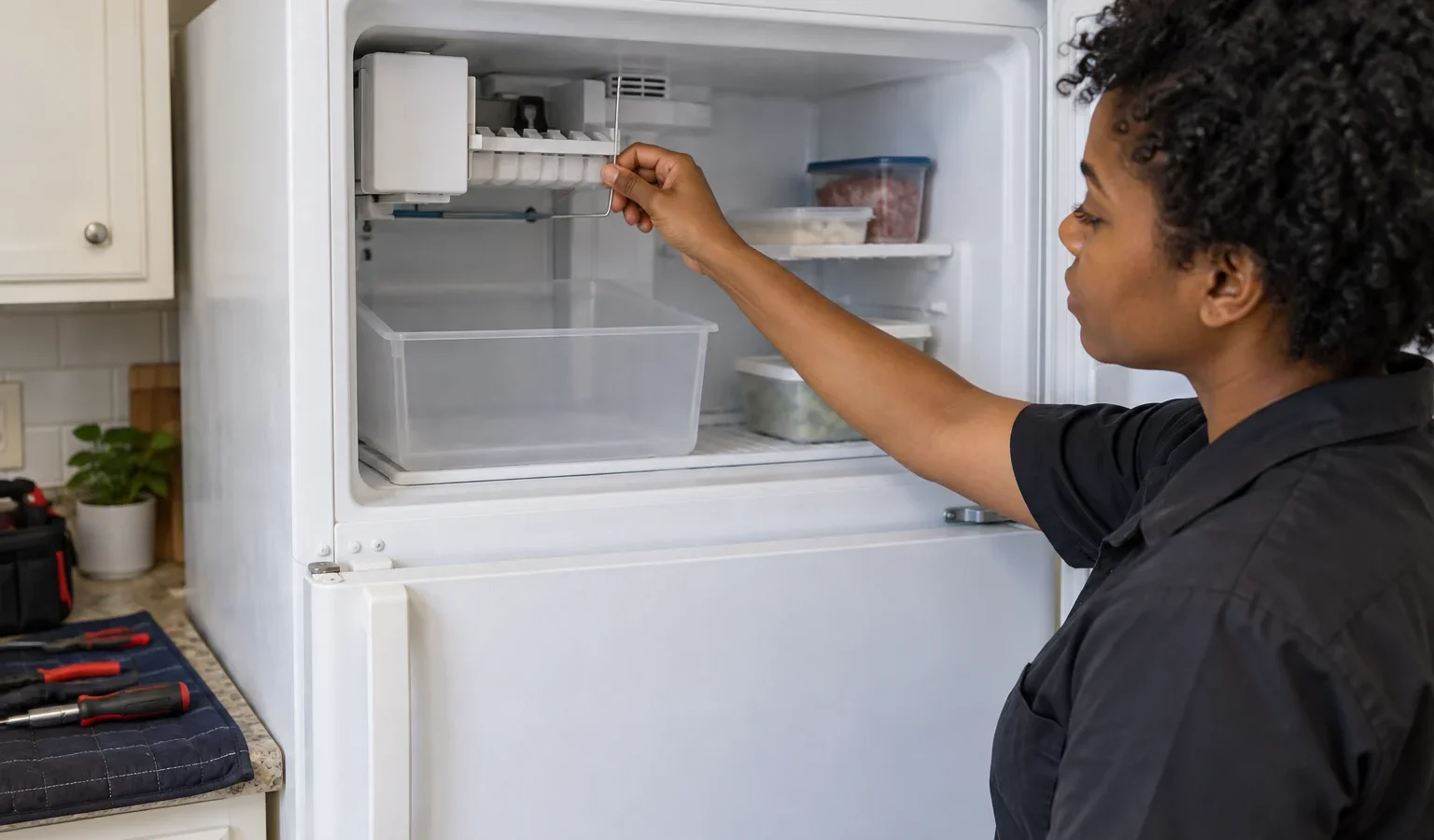
Pay attention to what the bin actually contains. A completely empty bin with a mold that looks dry points to water not arriving. A bin of small, thin or hollow-looking cubes means water arrives in small amounts, often because a supply line is partly restricted or a filter is clogged. A single fused clump of ice means cubes melted slightly and refroze, usually from a door that was left ajar, temperature swings in a garage unit or an ice maker that is not being emptied. Ice that forms but never drops means the release mechanism, or the heater that loosens the cubes, is not completing its cycle.
It also helps to know where the maker sits. In many French-door models the ice maker is up in the fresh-food compartment or in the freezer door area, and in side-by-side models it normally sits in the upper freezer compartment. Where it lives affects what freezes and what gets warm.
First, confirm the ice maker is actually turned on. Lift and lower the bail arm if there is one, or check the on/off control. Then empty the bin completely, discard any fused ice and look for cubes stuck at the back. Wash the bin and dry it before returning it, since a damp bin freezes cubes together.
Next, look at the supply. If you can reach the shut-off valve, make sure the handle is in line with the pipe, which means it is open, and glance at the tubing for sharp bends where the fridge was pushed back. If the water filter is overdue for replacement, swap it using the instructions printed on the unit, and flush the dispenser as the housing suggests before judging the result.
Finally, give the system time. After a reset or a refill, the first batch takes a while, so judge by the next day rather than the next hour. A single controlled power reset, unplugging the unit for a few minutes and restoring power, can also clear a stuck cycle on a control that has lost track of its position.
Do not chip at the mold with a knife or a screwdriver, which damages the plastic and the heater. Do not pour hot water into the ice maker. Do not remove the cover over the mold to test the heater, because the area carries live wiring. Do not pry open a fused clump with a metal tool in the chute, which can scratch the finish and jam the auger.
If you notice water pooling under the unit while the ice maker runs, it is no longer just an ice problem. The article on Maytag refrigerator leaking water covers that.
Ice makers are sensitive to what happens behind the cabinet. A line crimped by a refrigerator that was slid into a tight cutout, a valve that was never fully opened after a kitchen refresh and a saddle valve that has clogged with mineral buildup are all frequent in older flats and rentals. Rental buildings that share a single water filter location sometimes lose pressure after plumbing work. For garage refrigerators in the avenues and suburbs, a freezer that sits in a cold space can behave oddly because the cabinet thermostat gets confused.
We check the line from the valve to the cabinet, the inlet valve, the fill tube and the mold. The visit also covers whether the unit sits level, since a tilted cabinet can cause mis-freezing and uneven fill.
Ice makers are not the same across Maytag layouts, so the model matters. Find the label on the inside wall of the fresh-food compartment or on the door frame; our guide to finding the model number shows the usual spots. A French-door unit like the Maytag MFI2570FEZ and a side-by-side such as the Maytag MRSF4036PZ each use a different arrangement, and the parts and the test steps differ with them.
If the bin stays empty after the checks above, if cubes are consistently hollow, or if the dispenser works but ice never forms, schedule a visit. We diagnose before repairing, give you a written estimate and wait for your go-ahead. Learn more about Maytag refrigerator repair or browse Maytag refrigerators.
Low water flow is the usual cause, from a clogged filter, a partly closed valve or a kinked line. Cubes get smaller when the mold receives less water than it should.
A fresh start can take most of a day to build a usable amount, so give it that long before concluding nothing has changed.
Yes. The refrigerator and freezer work independently, and you can switch the ice maker off at the bail arm or control until it is repaired.
Usually the filter or old ice sitting in the bin is responsible. Replace the filter, empty and wash the bin, and keep strong-smelling foods tightly covered.
Not by itself. Fused ice is often a sign of temperature fluctuation or infrequent use, and emptying the bin may be all it takes.
Share a few details and we’ll confirm an appointment. Prefer to talk? Call us and we’ll help right away.