

Specialized Maytag Appliance Repair in San Francisco
Mon–Sat: 8:00 AM – 7:00 PM
A squeak, thump or grind from a Maytag dryer points to a belt, roller, blower or loose item. Learn what each sound suggests and which checks are safe.
A squeak from the laundry closet at the end of the hallway is hard to ignore. A Maytag dryer that squeals, chirps, thumps or rumbles is wearing something out, and the sound is usually specific enough to tell you what. The trick is to listen like a technician before the sound changes into a failure that stops the drum.
Sound is the most useful symptom you have. A high squeal that rises and falls with the drum turns is different from a thump that repeats once per turn, and both are different from a growl that appears only when the dryer starts. Note whether the noise happens with the drum empty, whether it changes with the heat setting, and whether it lasts for the whole cycle or starts after a few minutes. That information separates a loose item in the drum from a worn part below it.
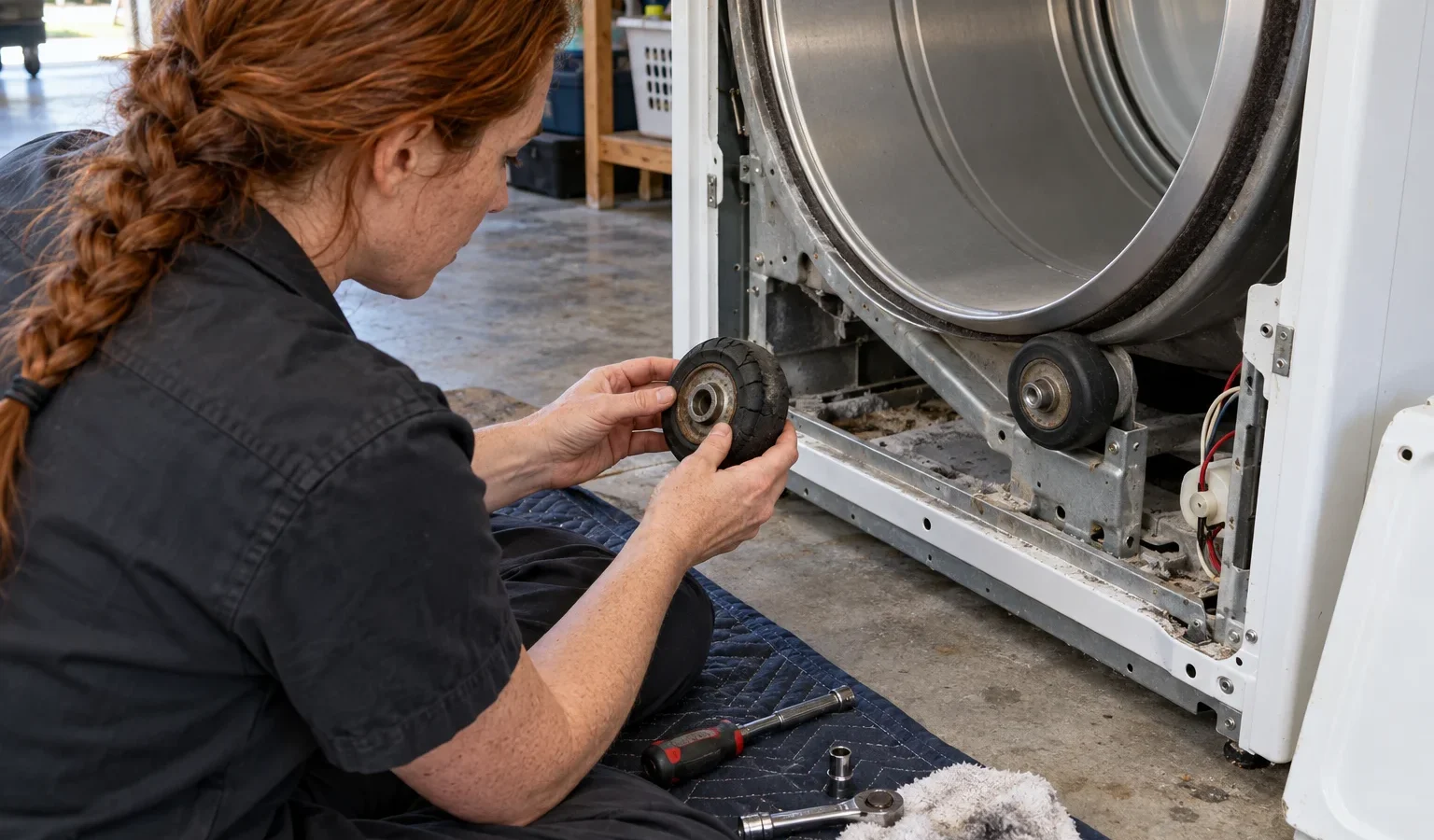
A dryer drum is turned by a belt that loops around the drum and a motor pulley, with a spring-loaded idler keeping it tight. As the belt ages it hardens and glazes, and a dry belt squeals. An idler pulley wheel that has run dry will chirp, getting worse as the dryer warms. The drum also rides on rollers at the rear or on glides at the front, and worn rollers produce a rhythmic rumble or a squeak on every turn. Because a squeal builds and fades with the speed, you can often hear it get stuck at one point in the drum rotation.
A single thump on each turn can be as simple as a zipper, shoe, belt buckle or tennis ball in the load. Check the pockets and the drum first. If the thump continues with an empty drum, a flat spot on a roller or a lump in the drum felt seal is likely. A tired drum seal at the front or rear can also drag and make a scraping sound.
A scrape that does not change with drum load may come from the blower wheel hitting its housing or from lint packed around it. A growl or grinding from the motor end that begins as the dryer starts suggests a motor bearing wearing. Metal-on-metal sounds should not be ignored, since a seized bearing can overheat the motor and a locked drum can burn the belt.
If the cabinet buzzes or rattles, check that all four feet touch the floor and that the dryer is not touching the wall or the washer next to it. In closet and stacked laundry, a duct pushed against drywall will drum and rattle with the airflow. A loose panel screw or a loose vent clamp can also cause a surprisingly loud tone.
That is where owner checks end. The belt, the idler, the rollers, the blower and the motor are all inside the cabinet, behind panels that expose live power and moving parts.
Do not spray lubricant into the drum or the vent, since oil on the belt or in the drum can smear clothes and is a fire hazard. Do not continue running a dryer that makes a grinding sound; a seized part can overheat. Do not open the cabinet with the dryer plugged in. If you smell burning, see smoke or hear the motor straining, switch it off at the breaker.
Top-load dryers such as the MED7205RF and the gas MGD7205RF, both Pet Pro top-load models, use the same general drum, belt and roller layout as most laundry dryers of this type. A front-load unit such as the MED8630HC has its own drum support. When you contact us, give the model number so the technician knows which design to expect. The article on finding a Maytag model number shows the usual label location, which for a dryer is typically at the door opening.
Some noises arrive with a display message. A drum that stopped turning may show a motor message, and the F7 group of dryer codes in the Maytag dryer error codes article covers the motor circuit. A dryer that turns slowly because the belt is slipping may also take far longer to dry; see the guide on a Maytag dryer that takes too long.
In a building with several dryers, one noisy machine tends to be the one with the most use. Tenants hear the squeal through a wall long before anyone reports it, and a belt that breaks mid-cycle leaves a wet load and a call to the manager. Noticing the change in sound early is often what keeps the repair small. Older buildings with wooden floors also carry the sound further, so a faint noise in a basement room can become a loud one in a flat above.
Book a visit if the sound is a squeal or grind that continues with an empty drum, if the drum turns hard or stops, or if the dryer smells hot. The technician diagnoses first, provides a written estimate and does nothing without your approval. The Maytag dryer repair page explains what a visit includes, and the Maytag dryers page shows the families we see.
A squeal usually comes from a hardened belt or an idler pulley that has run dry. It often gets worse as the dryer warms up.
For a short time it may be, but the noise is a warning. A belt can snap and leave a wet load, and a grinding sound should not be run at all.
It repeats with the drum. A loose item in the load, a flat spot on a roller or a lump in the drum seal are the usual causes.
No. Lubricant on the belt or in the drum can create a hazard, and the parts are behind panels with live power. A technician should diagnose it.
No. A coin in the lint area, an unlevel dryer or a duct rubbing the wall can make noise. A quick empty-drum test helps tell them apart.
Share a few details and we’ll confirm an appointment. Prefer to talk? Call us and we’ll help right away.