

Specialized Maytag Appliance Repair in San Francisco
Mon–Sat: 8:00 AM – 7:00 PM
When a Maytag dryer needs several cycles to dry one load, airflow is the usual culprit. Check the lint screen, duct and hood before assuming a part failed.
You start a normal load, come back after the cycle ends, and the clothes are still damp. You run it again. And again. The dryer is working, the drum turns and the air is warm, yet a load now takes far longer than it used to. Slow drying is one of the quietest dryer problems, and it is almost always about moving air.
A dryer works like a hot wind tunnel. Warm air passes through the tumbling clothes, picks up moisture and leaves through the vent. If the moist air cannot leave quickly, it hangs around in the drum and slows everything. The heat itself may be perfectly normal. That is why a dryer can feel warm and still dry poorly, and why the same dryer may behave very differently in two different homes.
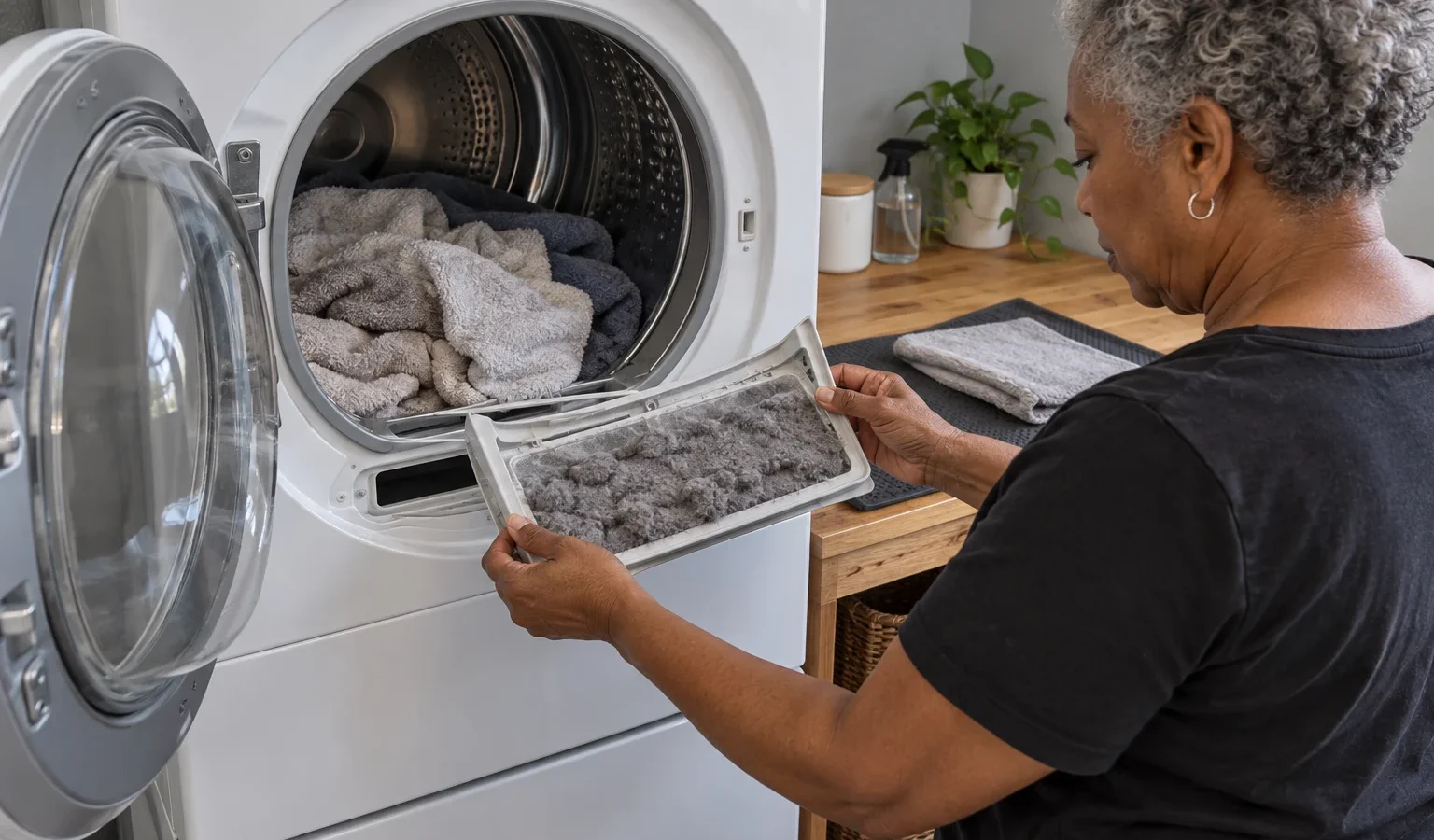
A clean lint screen is the first step, and it should be cleaned after every load. But fine lint slips past the screen and builds up in the housing, the duct behind the dryer and the run to the outside wall. A film of fabric softener on the screen can also block air even when the screen looks clean. Hold the screen up to the light, and if you cannot see through it, wash it with warm water and a soft brush and let it dry before you put it back.
Look at the duct behind the dryer. A ribbed foil or plastic hose that has been squashed against the wall or kinked at an elbow will cut airflow badly. Long vent runs through older walls, with several turns before the outside, trap lint at every bend. Dryers in tight closets get pushed back so far that the elbow behind them folds. In garages and on suburban side walls, the vent hood flap may be stuck shut with lint or blocked by a plant, a nest or a cobweb.
A simple look is enough to tell you a lot. With the dryer running, put your hand at the outside hood. A strong stream of warm air means the vent is moving air. A weak flow, or a flap that barely lifts, means the run is restricted. If it is short and accessible, you can carefully clear the hood. Anything inside the wall should be handled by a vent cleaner or a technician.
If the vent is clear, the dryer itself may be the cause.
An electric dryer with one heater leg out, or a gas dryer with a weak flame, will still warm the drum but do it slowly. A half-tripped double breaker is a common cause on electric models, and it is worth switching the breaker off and back on. The article on a Maytag dryer not heating covers the missing-heat case.
Some Maytag dryers sense how wet the clothes are and end the cycle when they judge them dry. If the strips inside the drum are coated with softener residue, they can misread and stop early or run on too long. F3 E2 is described as a moisture sensor issue that comes up after several loads are dried without cleaning the strips, and you can read more about it on the F3 E2 code page. Wiping the strips gently with a damp cloth is a reasonable owner step.
A worn drum seal, a tired blower wheel or a drum that turns slowly all reduce airflow. These are internal and should be handled by a technician.
If your display shows AF, F30 or F4E3, it is telling you the same thing as the symptom: restricted airflow. The AF code page describes it as a clogged lint screen or a crushed, kinked or overlong vent.
A gas unit such as the MGD7205RF adds a consideration: the burner needs air, too. A restricted vent hurts gas dryers sooner because poor exhaust affects combustion. An electric unit such as the MED6500MBK, a Pet Pro model, relies on the heater and the airflow limit working together; when airflow is poor, the heater cycles off often and the load takes far longer. Pet hair adds to lint, so households with pets need to clean the screen and vent more often.
Do not remove the back or the cabinet to check the blower. Do not run a dryer with a kinked duct for extra cycles, since heat and lint build up. Do not use a flexible foil hose that sags into loops. If you smell something burning or see smoke, power it off at the breaker. If you smell gas on a gas dryer, leave the home and call the gas utility or 911 from outside.
Landlords and property managers who run several Maytag dryers in a building should treat slow drying as a vent problem first. One lint-packed shared chase can make every dryer in the building seem faulty. When you contact us, tell us how loads take now compared with before, whether the clothes are damp or hot and damp, and whether the exhaust flap lifts.
Book if the lint screen, duct and hood are clear and the dryer is still slow, if it shows a heat or airflow code, or if the case gets warm to the touch. The technician diagnoses first, provides a written estimate and does nothing without your approval. The Maytag dryer repair page explains the visit, the Maytag dryers page lists what we handle, and the Maytag dryer error codes article explains the messages.
Moist air is not leaving fast enough. A clogged lint screen, a crushed duct or a blocked outside hood flap are the usual causes, and a weak heater leg is another.
Check the lint screen after every load, and look at the outside hood flap whenever drying slows. Duct cleaning inside walls should be handled by a vent cleaner or technician.
It can coat the lint screen and the moisture strips so they work poorly. Wash the screen and wipe the strips gently.
Not necessarily. A warm dryer with poor airflow is more often a vent problem. The heater can also run weakly on one leg.
Yes. Pet hair adds to lint and clogs the screen and the vent faster. Households with pets should check them more often.
Share a few details and we’ll confirm an appointment. Prefer to talk? Call us and we’ll help right away.