

Specialized Maytag Appliance Repair in San Francisco
Mon–Sat: 8:00 AM – 7:00 PM
A Maytag washer that thumps, walks or grinds during spin may have an uneven load, an unlevel floor or a worn part. Learn which checks are safe and when to book.
A washer that walks across the floor, thumps against the wall or rattles the closet door during spin is trying to shake itself apart. In a wood-frame flat the vibration travels through the floor to the neighbors, and in a garage it can loosen hoses behind the machine. Some shaking is harmless and comes from one heavy towel. Some is a warning that a part inside is wearing out.
How the machine moves tells you more than how loud it is. A single heavy thump near the start of the spin usually means the load shifted. A steady rhythmic pounding that grows as the drum speeds up points at balance or leveling. A rumble or grinding that continues even when the load is small and the drum is empty points toward bearings, a worn suspension component or a loose part inside the cabinet. A metallic clack at the end of the cycle may be a dropped coin or button caught between the tub and the drum.
A single wet bath mat or a pair of jeans can ride one side of the drum and throw it out of balance. Washers detect this and may show F0 E5 or OFb, and some top loaders try to self-correct by refilling and turning the drum gently. If the load looks lumpy when you open the lid, pull it apart and redistribute it. Do not wash a single heavy item alone; add light items alongside. Overstuffed drums do the opposite harm: a load that is too large can bring up an overload message and keep the basket from turning freely.
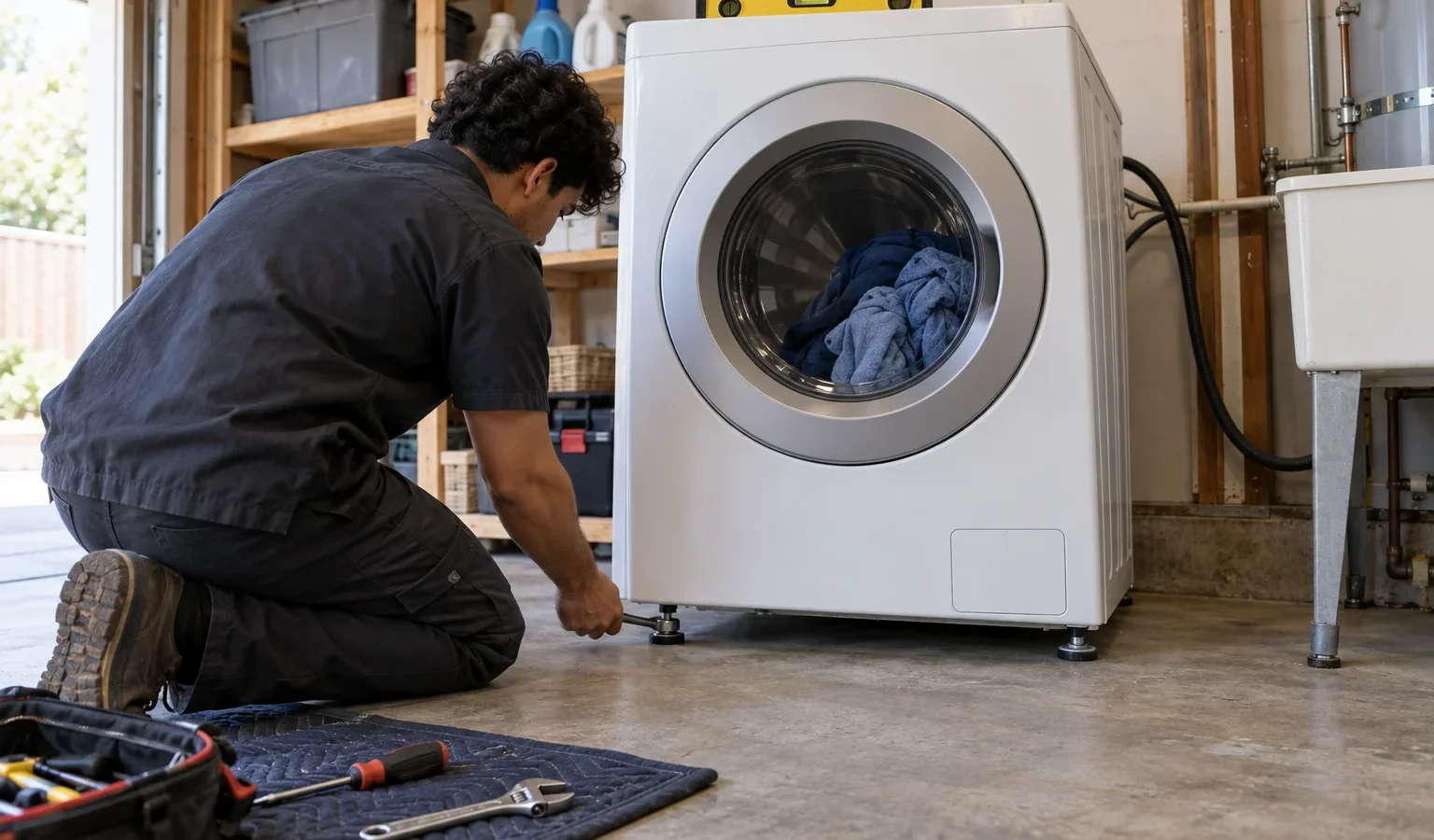
All four feet should touch the floor. Push gently on each top corner of the washer: if it rocks diagonally, one foot is off the floor. Adjust the feet until the cabinet no longer rocks and then tighten the lock nuts. In older Bay Area buildings the floor under a closet washer is rarely flat, and a washer that was level when installed can drift after a few months of spinning. Garage concrete often slopes toward a drain, and the slope alone can be enough to make a machine walk.
On a wood floor, soft boards or a mounted shelf under the washer will absorb the vibration and send it through the room. A stack unit or a washer on a raised platform needs extra care, since the motion is amplified at the top. If the floor flexes visibly when the washer spins, a leveling adjustment alone will not fix it.
Many washers are shipped with packing blocks, bolts or foam that must be removed before use. If the washer is newly delivered or has been moved, check the back of the cabinet for leftovers before anything else. A washer installed and run with those parts still in place will shake violently on the first spin. Look also for hoses and the power cord shaking against the wall, since a rattle that seems to come from inside the machine often turns out to be a hose touching the drywall.
Inside a washer, the tub hangs from springs or struts that absorb motion. When they wear, the tub starts to hit the cabinet at speed. Bearings that wear will add a rolling, grinding sound that you can hear even with the drum turned by hand and empty. Drum paddles or dividers can crack. A loose pulley or drive coupling can rattle at one speed only. None of these are owner repairs, and several can quickly escalate if the washer keeps running.
Top-load washers such as the MTW7200RF, a Pet Pro impeller model, and the MVWC565FW, listed with the PowerWash Deep Water Wash name, depend on a suspension that hangs the tub. A lid that does not seat can also rattle at spin speed.
Front loaders such as the MHW8630HC spin faster and carry more of their weight on the bottom of the cabinet, so leveling and feet matter even more. A worn bearing or a damaged shock can produce a growl that gets louder during spin.
Do not lean on the machine to hold it down during spin, and do not put a hand into a moving drum. Do not remove the cabinet or the back panel to look at the suspension. If the washer is walking so far that hoses are being pulled, switch it off and unplug it. If you smell a burning odor or see sparks, power it off at the breaker and leave it off.
If the noise is still there with an empty drum after leveling, or if the washer shows a motor or drive code, book a visit. The F7 group of codes in the Maytag washer error codes article covers motor speed and rotor problems. The technician diagnoses first, gives a written estimate and repairs nothing without your approval. Read about the process on the Maytag washer repair page and the families we see on the Maytag washers page. When you reach us, keep the model number handy; the article on finding a Maytag model number shows where it usually is.
The spin is the fastest part of the cycle, so any imbalance, uneven foot or worn suspension is amplified there. A lopsided load is the most common reason, followed by a washer that is not level.
It can pull on hoses and the power cord and may damage the floor or the wall behind it. Stop the cycle, redistribute the load and level the washer before you run it again.
Yes. A single wet towel or rug rides one side of the drum. Add a few light items to balance it.
Run an empty spin. If the shaking or grinding persists with nothing inside, the cause is in the washer itself and needs a diagnosis.
Yes. A stack amplifies motion and the floor beneath is often flexible. Leveling is more critical, and a visit may be sensible if the stack sways even after adjustment.
Share a few details and we’ll confirm an appointment. Prefer to talk? Call us and we’ll help right away.