

Specialized Maytag Appliance Repair in San Francisco
Mon–Sat: 8:00 AM – 7:00 PM
When a Maytag washer will not fill or fills too slowly, the cause is often a closed faucet, a kinked hose or a clogged screen. Learn the checks and when to book.
The lid is down, the cycle is on, and nothing happens except a faint hum. Or the tub gets a trickle of water and the washer sits waiting, then stops with a message on the display. A Maytag washer that will not fill, or fills far too slowly, is almost always about the supply side: the water that is meant to arrive, or the control that decides when to let it in.
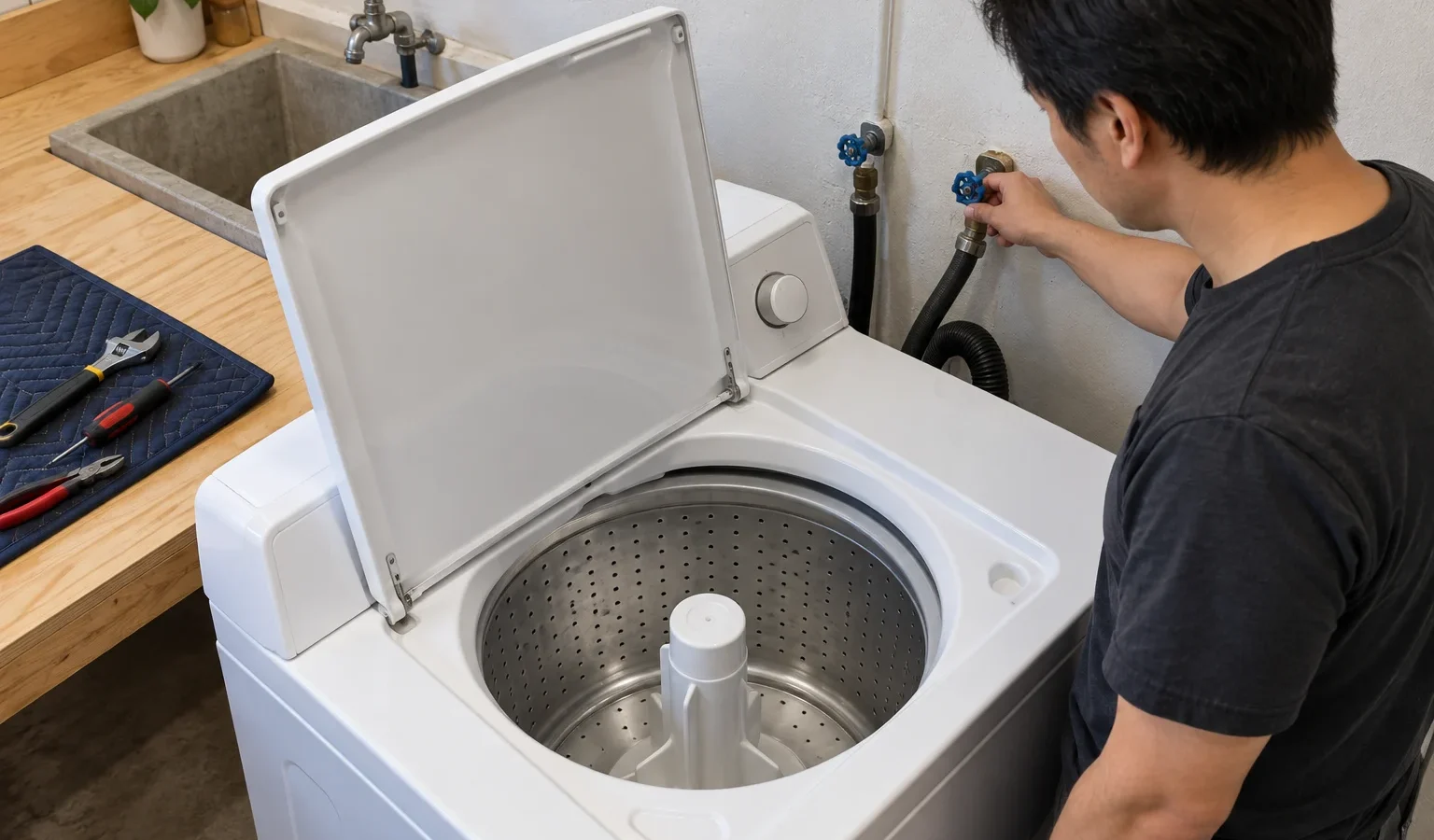
Two valves open the water, one for hot and one for cold. Each receives water through a hose from the wall and a small screen that catches grit. The control opens them only after it confirms the lid or door is closed and the level sensor reports an empty tub. If any of those things is missing, the washer waits or stops. That is why a fill problem may come from a closed tap, a kinked hose, a clogged screen, a door switch or a failing control, and why the display message is so useful.
The washer family uses several strings for this symptom: F20, FH, LF and F8 E1 all describe a fill that is missing, insufficient or too slow. F8 E1 is explained as a long fill where the water level does not change for a period of time. Hose mix-ups produce a different message: F8 E5 and HC are read as hot and cold hoses reversed. F8 E2 points to the dispenser system, and F8 E3 describes an overflow condition, so too much water rather than too little.
If your display shows something else, the full list is in the article on Maytag washer error codes.
That last step is as far as an owner should go. Tighten hose connections by hand and never overtighten with a wrench.
If the washer fills with cold water only, or only hot, one inlet may be restricted or one valve may have failed. This is a useful detail to share with us. If the cold supply is fine and the hot side is missing, check that the hot faucet is open and that the water heater has not been turned off. A tub that fills but ignores the temperature you chose often has hoses reversed, a small error with a clear code.
In some Bay Area buildings the laundry faucets sit at the end of a long pipe run, behind a shared supply or on a floor with weak pressure. Garage laundry on an outside wall may have faucets that were never fully opened. When pressure is low, the washer may sit in the long-fill state long enough to display a fill code even though the machine is fine. A simple test is to fill a bucket at the same faucet and see how long it takes. If it is slow, talk to the building owner or a plumber.
Top loaders such as the MVWB725BW, a Bravos XL model that is no longer sold new, typically rely on a water level sensor and a lid switch before they fill. If either one is not satisfied, the tub stays dry. Front loaders such as the MFW7020RF, a smart Pet Pro front load, add a door lock that must engage before water enters, and the dispenser area can leak or clog and affect where the water goes. Whatever the type, a washer that clicks and hums without filling is waiting on one of these conditions.
Do not use pliers or a wrench to force a stuck hose coupling, since the plastic fittings crack. Do not try to bypass the lid switch or reach into the cabinet to check the valves. If you see water around the hoses, leaking from the washer, or on the floor, close the faucets at once and switch the washer off. A fill valve that sticks open can flood a flat; switching off the water at the wall is the safest thing you can do.
A washer that cannot confirm a locked lid will not fill, while a tub that already holds water may refuse to start. If your washer has water in the drum that will not leave, the article on a Maytag washer not draining is the better guide. If the washer fills, then stops with a lock message, see the guide on Maytag washer lid lock flashing.
Book if the faucets, hoses and screens are clear and the washer still refuses to fill, if only one temperature fills, or if the code returns after a reset. The technician diagnoses before repairing, gives you a written estimate and starts nothing without your approval. The Maytag washer repair page explains the visit and the Maytag washers page lists the families we handle. Share the model number and the exact display text when you reach us.
The control may be waiting on a closed lid or door, a level reading or the water supply. A closed faucet, a kinked hose or a clogged inlet screen is the easiest place to start.
Yes, if you turn the washer off, close the faucets and unscrew the hoses carefully. Rinse the small screens, refit the hoses by hand and check for drips.
One inlet or valve may be restricted or failed, or the hot supply may be closed. Check that the hot faucet is open before booking.
No. Low pressure from the building supply can cause it too. A bucket test at the same faucet tells you whether the supply is slow.
Switch it off, close the faucets and unplug it. An overflow code points to too much water or foam and needs a diagnosis before another cycle.
Share a few details and we’ll confirm an appointment. Prefer to talk? Call us and we’ll help right away.