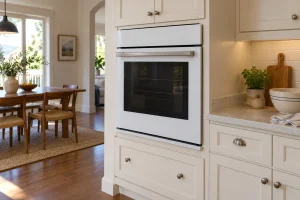
Wall Ovens
Single and double Maytag wall ovens in San Francisco: 27 and 30 inch models, door lock and sensor faults, code meanings and…

Specialized Maytag Appliance Repair in San Francisco
Mon–Sat: 8:00 AM – 7:00 PM
Single and double Maytag wall ovens checked in their cutouts, with the cause explained before anything is repaired.
A built-in oven sits in a cutout that was framed around it, which makes a wall oven repair different from fixing a freestanding range. In San Francisco that cutout is often in a tall cabinet run of a remodeled flat, a Victorian kitchen that was opened up, or a suburban house in the Sunset, Daly City or the East Bay hills. We diagnose and repair Maytag single and double wall ovens in place, and the notes below describe how those visits usually unfold.
The cavity stays cool, or the top oven works while the lower one does not. A technician separates the heating elements, the temperature sensor, the relay that feeds the element and the control that decides when to call for heat. A sensor that reads wrong can make a healthy element look dead, so the order of the tests matters more than the first guess. Our article on an oven that is not heating lists the symptoms side by side.
Cakes come out pale, roasts finish late, or the oven seems hotter than the display claims. Drift usually traces to the probe inside the cavity or to the control reading it. A convection oven adds a fan and its motor to the list, since moving air that stalls changes how food cooks. See oven temperature off for what to notice before you call.
After a self-clean or a long bake, the lock motor and its switch may stay engaged. Hinges and gaskets also wear in a heavily used kitchen. The article on a locked wall oven door explains the sequence the oven expects before it lets go.
The touch panel, the oven control behind it and the wiring between them each fail in their own way. A panel that responds only in part, or a clock that resets after every outage, points toward different parts. In a double oven both cavities can share a control, so one fault may appear in two places.
Maytag wall ovens show letter-number codes, and the code is a lead rather than a verdict. Write the exact characters down before you reset anything. Several families are covered, and each page explains only the meaning the code carries. F1 and F2 point toward the oven temperature sensor, the control or the wiring between them. F5 concerns the door latch assembly and its switches. 4D21 and similar codes relate to an airflow restriction or the cooling fan. F9 most often indicates the oven is wired incorrectly at the home electrical supply, which matters for a newly installed unit. On a connected oven, FC E1 describes a Wi-Fi problem, such as a timed-out connection or weak signal, and has nothing to do with heat. For a wider look, read our article on Maytag wall oven error codes.
A wall oven depends on three things around it: the cutout, the supply and the ventilation. The cutout has to be square and supported, because a unit that sags against the frame can bind its door and strain its hinges. The electrical supply is a dedicated circuit, and a loose or incorrectly wired connection behind the oven produces odd symptoms that look like control failures. Airflow matters as well, since the cooling fan pulls room air through the unit to protect the cabinet, and a blocked intake or a cabinet full of stored baking sheets can cause overheating faults.
Double ovens, common in newer remodels, stack two cavities in one cutout. The lower cavity sits close to the floor of its cabinet, and the upper one near eye level, so heat, grease and steam collect in different places. A fault in only one cavity narrows the search quickly. A wall oven installed above a built-in microwave drawer or under a cooktop shares cabinetry with those appliances, and moving it for access is a job for two people and a technician, not a household task.
Older Bay Area homes add wrinkles of their own: a crowded panel in a pre-war flat, or a unit swapped into a cutout made for a different oven, leaving gaps and awkward trim.
Start with the simple ones. Confirm the breaker has not tripped and that the display has power. Make sure the door closes fully, with nothing stuck in the gasket or the latch. Remove oven racks and foil that may block vents or touch an element, and wipe spills from the door frame. If a code appears, write it down exactly, then try one controlled power reset by switching the breaker off, waiting, and switching it on. Note whether the code returns, because a code that comes straight back is information a technician wants.
Do not remove the trim, the control panel or any cover. Do not test wires, bypass the door switch or run the oven with the door held shut by hand. A self-clean cycle is no cure for a fault code and puts extra strain on a stuck latch.
Switch the breaker off and leave the oven alone if you smell burning insulation, see sparks, notice a scorched wall of the cavity, or find the display flickering with the door hot to the touch. A latch that will not release is inconvenient, but forcing the door can break the hinge. If the oven heats far past what you set, turn it off at the breaker.
Single and double wall ovens differ in sensors, latches and controls, and even two ovens of the same width can use different parts. Give us the full model number when you book. It usually sits on the oven frame, along the edge when the door is open, or on the side of the cavity. Our guide on how to find your Maytag model number shows where to look. The models include the MEW9627FZ and MEW9630FZ double ovens, and the MEW9527FZ and MEW9530FZ single ovens.
You tell us the model, the symptom and any code. The technician checks the oven in its cutout, confirms the fault by testing, and explains what failed and what it takes to fix. You get a written estimate, and nothing is repaired until you approve it. Because built-in ovens are heavy and hot, we ask that the cavity be cool and the area in front clear. Landlords and property managers with several ovens in one building can send the units together, which helps when one model repeats across the building.
An oven with a failed sensor, a worn latch or a broken fan is usually a repair. A cracked cavity, damage to the cutout or repeated control failures may change the picture. Our article on repairing or replacing a Maytag appliance lays out what to weigh. See also the full Maytag wall ovens guide for the lineup we service.
Yes. Each cavity has its own element and sensor, though the two often share a control, so a technician tests both before naming the cause. If only the lower oven misbehaves, the search usually narrows to parts that serve that cavity alone.
No. Write down the characters and when it appeared, because an intermittent code often points to a loose connection or a sensor that fails only when hot. Tell the technician the pattern, then compare it with the code pages on our site.
It is better to leave it alone. The door lock is part of the safety system, and forcing it can bend the hinge or damage the latch assembly. Turn the oven off, let it cool, and try a single controlled reset at the breaker.
We repair the Maytag wall oven and the Maytag microwave units we list. A combination installation needs the model number of each unit so the technician can look at the right appliance and its parts.
The full model number, a short description of the symptom, any code written exactly as shown, and a note about whether the oven is single or double. Clear space in front of the oven helps too.
Single and double Maytag wall ovens in San Francisco: 27 and 30 inch models, door lock and sensor faults, code meanings and…
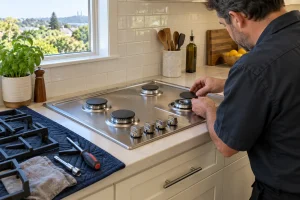
Maytag electric and gas cooktops repaired in Bay Area homes: dead zones, burners that click without lighting and touch control faults, with…
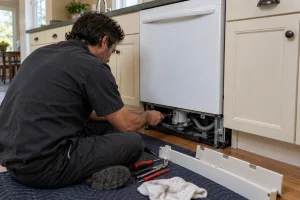
Drain, fill, heat, latch and control faults on Maytag dishwashers diagnosed in San Francisco and the Bay Area, with a written estimate…
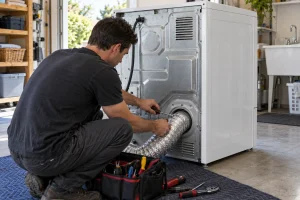
Maytag electric and gas dryers diagnosed on site at your Bay Area home, from clogged vents and no-heat faults to worn belts,…
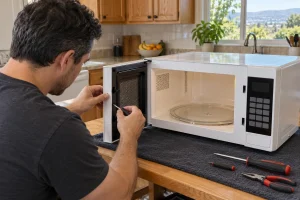
Over-the-range Maytag microwave repair in San Francisco and the Bay Area, from no-heat faults to vent fans, door latches and display codes.
Share a few details and we’ll confirm an appointment. Prefer to talk? Call us and we’ll help right away.